Tuesday, July 24, 2007

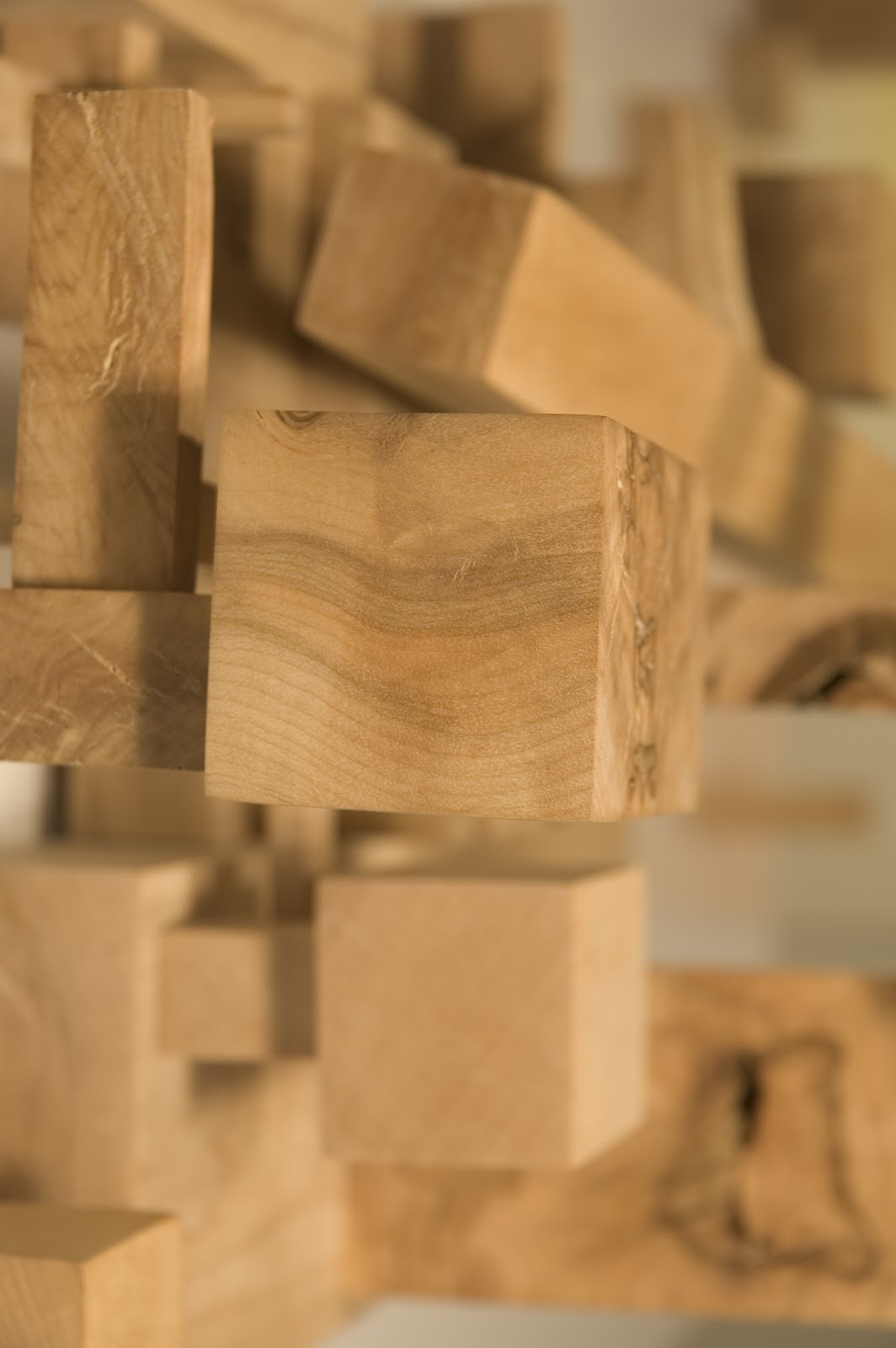
Wood Relief Composition

Every now and then I must work with wood.  I just feel the need for it, and I go at whatever I have available to me.  I prefer to work with maple, the cleaner the better.
Here is my new piece, hope you enjoy it.

Relief Composition #1
2007, Maple and enamel on panel
46" x 26"

Detail.


Hung horizontally.

I will work with Maple again...
...I have been saving a large amount of very special wood just for artwork.

Thursday, July 19, 2007

Proteus Magazine

I am going to be published in Proteus Magazine issue #2.  It is going to come out today in PDF format.  Proteus Magazine is an online arts magazine.

Read it online!

Thursday, July 5, 2007

2.1_The fundamentals of oil painting


2.1  The fundamentals of oil painting
There is only one rule to being an oil painter:  use oil paint anyway you can, as all other variables are irrelevant and inconsequential.  There are tried techniques to the application of oil paint, but those also are a variable.  That is not to say don't learn what has worked before you, simply do not be confined by another's personal preferences.  I say that the single most important fundamental is that the student of painting, the artist, and the master painter, use oil pigments and only oil pigments.  

In chapter 2, I will discuss the fundamentals of oil painting as I see and have practiced them.  It is my hope that an artist reading this in the future will find value within a disciplined study of oil painting, just as this future will generate new and innovative ideas in said artists generation.  


Tuesday, June 26, 2007

Compositional element study

I have been working on the BitTorrent series of paintings in stages this week.  This shaky little sketch is going to be added to the newest work, and I like to think that I know the Colors already.


Normally I just do not post studies...
...at least not the shaky ones, but this one is cool.

Monday, June 18, 2007

Artwork of the month by Georgia O'keeffe

I never really liked Georgia O'keeffe's work.  I found it sloppy, quick, and thoughtless.  After several years of walking past this painting, I finally took a moment to really look at it.  I still do not really care for her work, but I do have a new appreciation of her abrupt brushstrokes.  

Georgia Okeeffe
American, 1887-1986
"Pedernal- from the ranch #1"
1956, oil on canvas.


Thanks for checking in...
...even if you don't like O'keeffe.

Thursday, May 24, 2007

1.5_The term "Outsider Art"


1.5_The term outsider art

I would like to address the term Outsider Art simply because it implies a self-taught artist, and that implies an artist of less worth than a university trained artist.  I reject that a degree from a university defines an artist as an insider or outsider.  Tuition fees do not dictate talent and the aesthetic freedom of the arts.  The trained monkey from the university was told what to learn.  The contrast between a self taught artist and a university trained one weighs down many artists.  Grants, juried exhibitions, and other contested entries for emerging artists to gain some recognition, all look at the artist's history for a university degree.  We are told that it does not matter, and we know that it does.  The insider artist gains every advantage simply with a degree.  As if a university trained artist has worked harder than a self taught one; earning their title through tuition.  Contrary, the self taught artist sacrifices more, works harder, is more prolific and innovative than the trained monkey.
I reject the idea that self taught artists are outsider artists.  The term outsider artist is a derogatory, classist, limited view point from the economically elite collectors, who are essentially investors that see purchasing works of art as a sound long-term investment.  Originally the term outsider art was used to describe the artwork of insane asylum inmates.  Gradually the term came to be used as artwork created outside of the established schools of art.  Today outsider art means both culturally and educationally outside of the status quo.  Regardless of its current definition or popular celebration with our current generation, the term outside artist illuminates the artist in a negative light.

With the implication that the term outsider art brings with it, like naive art, art of the insane, self-taught and self-educated, it within itself is a passive aggressive method of economic classism within the art world that describes the self-taught, self-made artists as less than the artists of the status quo.  It is the very same artists described as outsiders that create the innovations that the university elite are groomed to mimic poorly.  As they stand there in front of their easels being the monkey with their tin cups begging for ideas, as they grovel through art history, the university trained artist rarely develops a language all their own.  

How dare our artistic establishments frown on the self-taught artists.  To be an artist is intrinsically the rejection of established values within the system of governing thought.  I reject the term “Outsider Art,” the idea that works of art produced outside the boundaries of the official art world are to be considered Outsider Art.  

Some have chosen to adorn the term as a badge of sovereignty, proudly and defiantly claiming that flag”Outsider Artist” to be reclaimed and reassociated from the foresight of classism.  I reject the term Outsider Artist for its biased, classist, label system for the wealth elite.  Either you are an artist, or you are not.  It is that simple.


Wednesday, May 16, 2007

Artwork of the month by Ruth Duckworth

Ruth Duckworth is one of several women that I admire for their life's accomplishments.  This work is on display at the Minneapolis Institute of Arts.  I have spent countless hours looking at this painting, investigating its simplicity and complications.  

Ruth Duckworth
American, 1919-2009
"Untitled"
2007, porcelain.

Tuesday, May 8, 2007

Trojan Horse Studies

These are just some ideas for my Trojan Horse painting.


This is cool.  Imagine the colors flowing in both directions from the external lines moving into the centers.  I have a great deal of work to do before I am ready to paint.


Tuesday, April 24, 2007

1.4_ A brief on the nature of subjectivity


1.4  A brief on the nature of subjectivity
Freedom of expression, to hold any opinion, and act on those opinions, is an invaluable liberty for an artist.  The idea of being an artist became an American pop fashion, like the clothing style an individual chooses to wear.  It is not a mystery as to how this happened.  Subjectivity without discipline fueled within a materialistic mass marketed society of vanity, naturally and quietly created this era.  The fifth intellectual dark-age; where our current generation are all aspiring artists, and all of these emerging somethings keep trying and keep failing to have their big moment.  They were showed fame, and it was kept from them, creating this untalented generation of dreamers.  Do not take my words for that of a fool.  There are countless known and unknown master artists in every corner of the States; for every master there are thousands of fools living lies.

Minneapolis is the city of the arts.  Living here, it seems as if everyone is an emerging something, where by removing the validity of the term emerging as a result of its commonality.  We live in the era of the American artist, the creative class, a group of dreamers in perpetual poverty.  As a result of this generation, subjectivity, diversity, and individuality has become the norm.  Being different, unique, and standing out, has become more important than the honesty in knowing ones’ self and what one is capable of.  For the artist all of this just happens and s/he becomes himself/herself with ease.  For the pretender, the mask they adorn creates a similar emotional crisis just as that of schizophrenia.  In order to understand this disease of individuality driven materialism we live with, we must first understand free will, and with that we start with the idea, causes, needs, inaction, and action of the subjectivity of making decisions.

Subjectivity is the unjustified personal opinions commonly based on perspective, particularly feelings, beliefs, and desires in direct conflict of proofs and justified belief.  Subjectivity addresses a unique view of experiencing reality available to individuals where the causes of experience are objective and without ownership, but the perspective of these experiences are subjective and commonly owned, i.e. my feelings about my events are my idea and my identity.

Subjectivity in conjunction with the arts is a practical necessity.  Subjectivity is essential to the world of art, albeit, the ideas of those that value individualism without a sense of being or a personally defined idea of what one is truly capable of fall prey to the modern materialistic cycle of individualism.  Thereby forgetting the ideas of self-cultivation, that at first inspired their subjective world view, we are thereby ceasing to know truth in their personal behavior; and with it the momentary ability to judge and know right from wrong.  There is no true subjective but through culture, tradition, and generation.  The ideas of good and bad are presented for us.  The enemies of the subjective can not understand the desire to be different, is not to be different.

The artist that is simply not honest with one's being uses the idea of subjective to mask their inadequacies in originality and talent.  That artist creating works of art to be recognized as an individual of importance by their work, as a result they invent an icon of themselves as a character style, each trying to out-do the other artist pop renditions of the human melodrama.  This individual invents their identity, continually recreating themselves to become what they wish to be, regardless of past and present truth.  This is the result of any subjective competitive media.  As the competitive nature of the arts use their identifying mark and projected sense of being, becomes anarchy at first, and then a universal that the individual believes all must adhere to.   

This critique is without an honest look at these shared opinions.  As a result of this indecisive subjectivity this artist becomes the intellectual opinion on their current state as an ism or school of art simply by an established majority.  Without an isolated voice, this generation of artists has thereby become speechless, developing into art for the sake of art- without purpose outside of a waning child's ego or adults neurosis.  Hence, todays subjective established materialistic artistic philosophies granted this generations artist's identities.  It can be likened to the death of cubism as Picasso’s innovations were copied by hundreds of artists and are still mimicked today as people intellectually catch up to Picasso. 

There are pioneers within this generation of artists, and like Picasso, multitudes of the unimaginative follow their wake mimicking only the basic level of rendered aesthetic.  This artist is full of egotistical fantasy and momentary self discovery, and poisons himself and the arts with every stone wheel they claim to invent. The death of expressionism is a direct result of the copy cat, which for some reason people continue to figure out for the first time and keep regurgitating its emotional fever on the canvas over and over again.  

Each generation has its voice as that voice can be considered a purely subjective viewpoint where the previous generation can not relate to the new.  Conclusively, I can state that only the honesty of the artist's works truly maters.  For if the artist creates works that are true to their thoughts, honest with their own tastes and internal dialogue, and although a subjective voice, it is their own to identify with.  


Wednesday, April 18, 2007

Artwork of the month by Paul Signac

Paul Signac is a simple painter, chiseling subject matter that was popular and commonplace in his time.  As was his life and his paintings - commonplace.  He married, left her later, shacked up with a woman, painted some, and died.

I have always liked this painting.  I enjoy the seemingly random color placement of his work.

Paul Signac
French, 1863-1935
"Blessing of the Tuna Fleet at Groix"
1923, oil on canvas


Go see this at the Minneapolis Institute of Arts...
...it is worth a few moments of investigation.